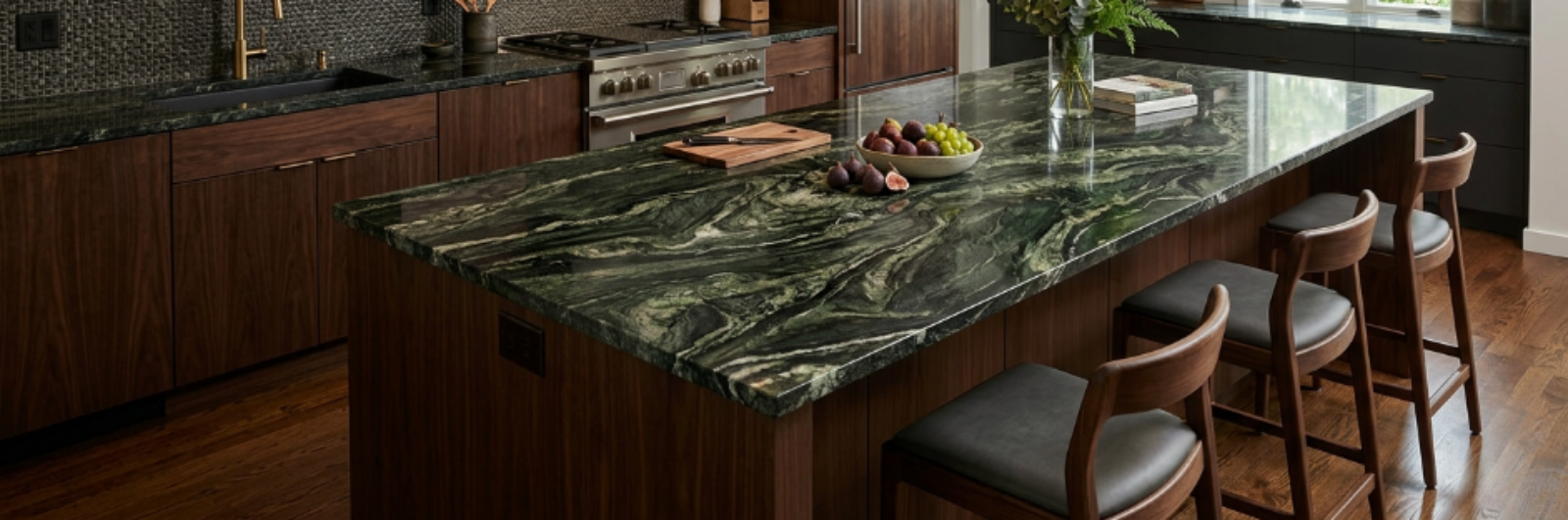
Choosing new counters is one of those projects that looks simple until the samples show up and every slab looks different in person than it did online. Material, edge profile, seam placement, and even the direction of the veining all change how a kitchen or bathroom reads once the light hits it. For anyone researching countertops, Round Rock TX projects tend to follow a similar pattern: homeowners want durability that matches a busy household, but they also want something that photographs well for resale down the road. Williamson County’s housing stock skews newer, with a median home construction year around 2002, so a lot of these projects involve replacing original builder-grade laminate rather than starting from scratch.
Popular Countertop Materials for Texas Homes
Material choice usually comes down to three things: how the surface holds up to heat and moisture, how much upkeep it needs, and what it costs installed. Central Texas summers push kitchens hard, especially with canning, grilling prep, and the general humidity swings between seasons.
Granite
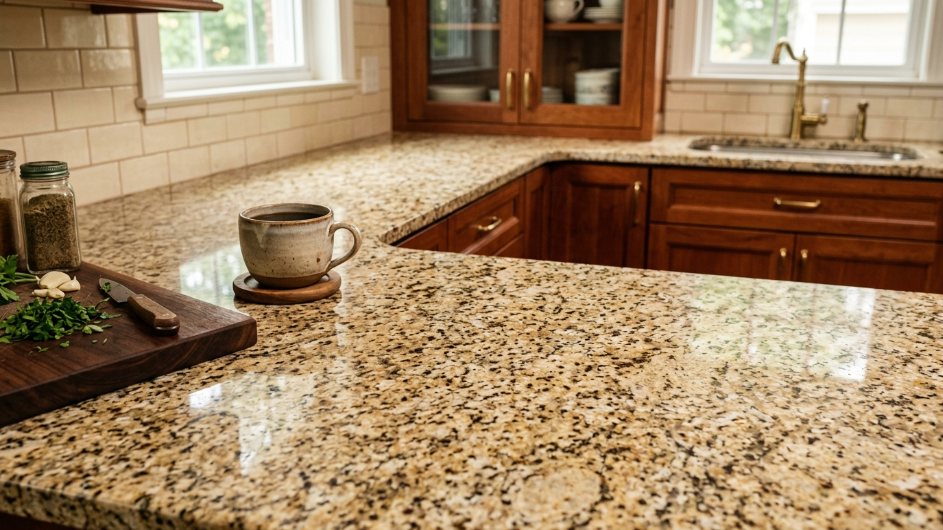
Granite remains a common choice because it resists scratching and handles hot pans reasonably well, though a trivet is still the safer habit. Prices for granite typically run in the $40 to $100 per square foot range installed, depending on the slab grade and edge detail selected. Sealing once a year keeps the stone from absorbing oils and wine stains.
Quartz
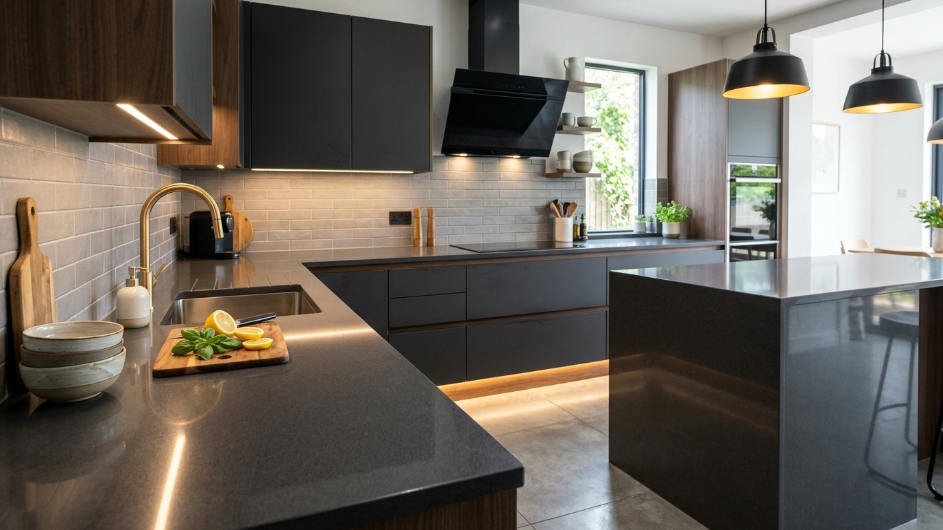
Quartz is engineered from crushed stone and resin, according to Investopedia’s overview of building material manufacturing, which is why it comes in more uniform colors than natural stone. It does not need sealing, and it holds up well against staining. The tradeoff is heat sensitivity: direct contact with a hot pot can scorch the resin.
Laminate and Butcher Block
Laminate remains the budget option, often priced under $30 per square foot installed, and modern versions look far better than the laminate from twenty years ago. Butcher block brings warmth to a kitchen and can be sanded down when it scars, but it needs regular oiling to avoid drying out and cracking.
- Granite: strong heat resistance, needs annual sealing, wide price range by slab quality
- Quartz: low maintenance, no sealing required, sensitive to direct heat
- Laminate: lowest cost, easy to install, more prone to scratching over time
- Butcher block: warm appearance, repairable surface, requires regular oil treatment
What Drives Countertop Pricing Locally
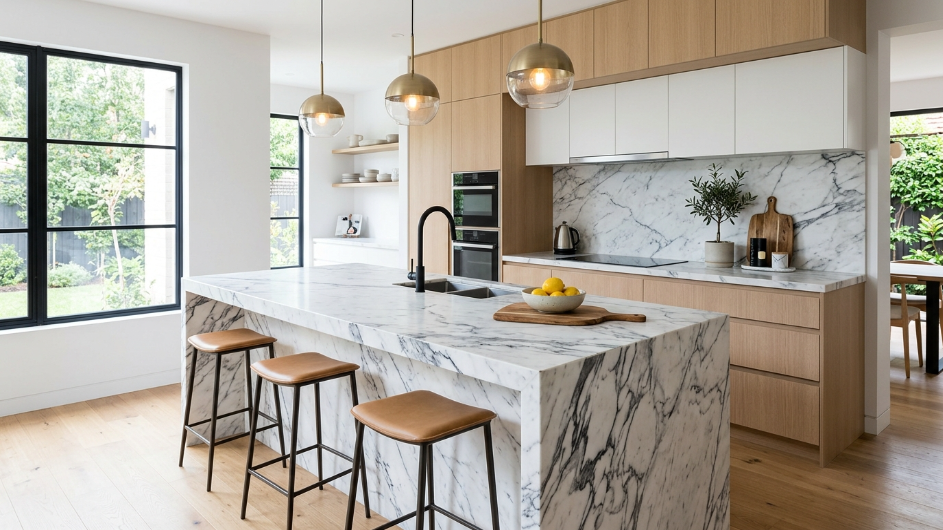
Cost varies by material, but it also shifts with square footage, edge profile, and how many seams a kitchen layout requires. Williamson County’s median household income sits at roughly $99,287 as of the 2024 American Community Survey estimate, and the median home value in Round Rock is close to $418,600. Those figures matter because remodeling budgets tend to track local housing values fairly closely; a kitchen renovation in a $400,000 home usually calls for a different countertop tier than one in a starter condo.
| Material | Typical Installed Cost (per sq ft) | Maintenance Frequency |
|---|---|---|
| Laminate | $20 – $30 | Minimal |
| Butcher Block | $35 – $70 | Every few months |
| Granite | $40 – $100 | Annual sealing |
| Quartz | $50 – $120 | Occasional cleaning only |
Old Settlers Park and the neighborhoods branching off Gattis School Road have seen a steady wave of kitchen updates as original 1990s and early 2000s builder finishes reach the end of their useful life. That renovation cycle is one reason countertop fabricators in the area stay busy through spring and early summer.
Maintenance Tips by Material Type
A countertop’s lifespan depends more on daily habits than on the material label. Wiping up citrus juice quickly, using cutting boards instead of the stone directly, and avoiding harsh abrasive cleaners will extend the life of almost any surface.
- Test a granite counter’s seal by dropping water on it; if it beads up, the seal is holding, if it soaks in within a few minutes, it is time to reseal
- Clean quartz with mild soap and water rather than bleach-based cleaners, which can dull the resin over time
- Keep laminate edges dry near the sink, since water exposure at the seams causes swelling
- Reapply food-safe mineral oil to butcher block every four to six weeks
Hiring a Local Installer: What to Check
Fabrication and installation quality matters as much as the material itself. A poorly cut seam or an uneven overhang can undo the benefits of an otherwise good slab.
- Ask whether the installer templates on site with a digital or physical template before cutting the slab
- Request to see photos of past seam work, particularly on L-shaped or island layouts
- Confirm whether old countertop removal and disposal is included in the quote
- Check that the installer carries general liability insurance, since stone slabs are heavy and can cause property damage if handled incorrectly
Homeowners near the IH-35 corridor and the Old Town area, close to the original rock crossing on Brushy Creek that gave the city its name, often deal with slightly older plumbing and cabinetry, which can affect how a new countertop fits. Measuring existing cabinet boxes before ordering a slab avoids costly resizing later.
FAQ
How long does a countertop installation take?
Most single-kitchen installations take one to two days once the slab has been fabricated, though fabrication itself can take one to three weeks after templating.
Can old countertops be reused elsewhere in the home?
Sometimes. Laminate rarely survives removal intact, but solid stone slabs can occasionally be repurposed for a laundry room or bathroom vanity if the size works.
Do quartz counters need sealing like granite?
No. Quartz is non-porous by design, so sealing is not part of routine maintenance.
What is the average lifespan of a granite countertop?
With regular sealing, granite commonly lasts 20 to 30 years or longer before homeowners consider replacement, usually for style reasons rather than material failure.
Final Thoughts
The right countertop choice depends on budget, maintenance tolerance, and how a household actually uses its kitchen. Comparing a few material samples in person, under the same lighting the kitchen will actually have, remains the most reliable way to decide.